leadership keynote speaking
Looking for a speaker who creates real change - not just a great moment?
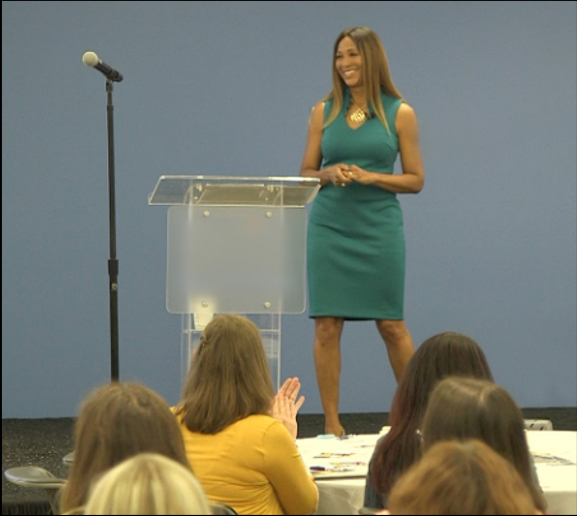
Beth Ridley delivers keynotes and workshops that help leaders improve team performance, communication, and workplace culture.
A nationally recognized speaker and contributor on leadership and workplace culture for WTMJ4, Beth works with industry associations, conferences, and organizations across the country.
Her sessions go beyond awareness. They help leaders improve how teams communicate, make decisions, and follow through.
Beth introduces practical frameworks and tools leaders can apply immediately, along with her Team Culture Conversation System —short, structured conversations embedded into existing meetings to turn insights into action.
Audiences leave with:
- Clear language and shared focus
- Practical tools they can use right away
- A simple path to sustain behavior change
Because culture doesn’t change from inspiration alone.
It changes when teams consistently improve how they work together.
Where beth has spoken recently


Most Requested Keynote and Workshop Topics
Overview
According to new research in Harvard Business Review, 89% of knowledge workers have reported a decline in their workplace wellbeing since the start of COVID-19. Meanwhile, loneliness (one outcome of a lack of belonging) is on the rise, with staggering effects on business.
Given this landscape, leaders are focusing more than ever on workplace wellbeing. Increasingly, effective wellbeing strategies are including a focus on fostering employees’ sense of belonging – an accumulation of day-to-day experiences that enable a person to feel safe, foster genuine connections with others and bring their full, unique self to work so they can thrive.
Learning Objectives
- Learn what belonging at work is and what current research is telling us about why it matters to employee wellness and wellbeing.
- Understand how diversity, inclusion and equity contribute to belonging.
- Gain easy to implement best practices to build belonging in your meetings to support daily wellbeing among employees.
Organizations today consist of multiple generations, each bringing unique perspectives, needs, and expectations. These differences can sometimes lead to tensions among employees. Effective intergenerational collaboration is not just beneficial, but essential for reducing friction, enhancing innovation, boosting employee satisfaction, and improving retention—ultimately driving overall business success. To achieve this, understanding and addressing these generational dynamics is crucial for fostering a cohesive, inclusive, and productive work environment.
In this interactive learning session, we will explore (and debunk) common stereotypes of how each generation shows up at work. Through online polling and discussions, we’ll delve into preferences across generations regarding work values and styles. Participants will gain practical inclusive leadership skills, along with tips and tools to better understand, appreciate and bridge across these differences. This ability will foster a culture of collaboration and innovative thinking within teams.
Key Takeaways
Understand Generational Traits: Identify and describe the defining traits, communication styles, and work preferences of different generational cohorts, such as Baby Boomers, Generation X, Millennials, and Generation Z.
Learn Inclusive Practices: Apply inclusive leadership practices to improve understanding and collaboration between members of different generational cohorts.
Develop Action Plan: Develop an action plan to apply inclusive practices and use an intergenerational engagement guide to create a work environment where all generations feel valued, respected, and empowered to contribute effectively.
We often hear the phrase “bring your full self to work,” but what does it really mean—and how much should we truly bring? Many of us struggle to find the right balance between being authentic and fitting in with workplace norms. This interactive workshop is designed to help participants navigate that challenge, striking a balance that allows us to be true to ourselves while being flexible enough to foster a culture of belonging for others.
Objective: To explore how we can align personal authenticity with workplace cultural norms to contribute to a more inclusive and supportive work environment, using the concept of “Empowered Alignment.”
Key Takeaways:
Balancing Authenticity and Adaptation: Gain clarity on what it means to “bring your full self to work” and learn how to strike a healthy balance between authenticity and adapting to workplace norms.
Exploring Personal Adjustments: Understand the aspects of ourselves we commonly adjust at work, how these adjustments impact us, and how to align our personal and workplace values to foster belonging.
Navigating Competing Values: Learn practical strategies, including a case study, to balance competing values within a team, creating an environment where everyone can thrive.
As organizations race to adopt AI and new digital tools, many are discovering a new form of fatigue — AI burnout. The speed of technological change can leave employees feeling anxious, disconnected, and overwhelmed. When the human side of change is neglected, even the most advanced systems underperform, and well-intended transformations stall.
This session explores how to close that gap. Through real case studies from organizations that have navigated digital transformation well — and others that haven’t — I’ll share what happens when the human experience is either ignored or intentionally built into the process. Participants will learn practical ways to balance technology investment with human investment: trust, connection, psychological safety, and purpose.
Designed for executives and HR leaders driving organizational and culture change, this session delivers real-world lessons, best practices, and actionable strategies drawn from years of hands-on experience leading technology transitions that stick.
Key Takeaways:
- Understand AI burnout and human barriers to change: Learn what causes resistance and exhaustion during digital transformation—and how to prevent it.
- Learn from real success and failure stories: Hear specific case studies illustrating what goes wrong when culture is overlooked—and what works when belonging and communication come first.
- Apply a proven, human-centered framework: Gain practical, everyday leadership actions that foster trust, ownership, and resilience—so innovation drives both performance and wellbeing.
This session offers a forward-looking leadership and culture model that helps managers respond thoughtfully to the strain rapid tech transformation places on the workforce—ensuring their investments not only deliver ROI, but also fulfill the promise of technology to make work and life better by empowering people to shape what’s next.
AI doesn’t have to be overwhelming, expensive, or intimidating. In fact, nonprofits are uniquely positioned to benefit from AI—if leaders understand how to use it thoughtfully, ethically, and in ways that support their mission and their people.
This interactive working session helps nonprofit leaders build clarity and confidence around AI’s real utility. You’ll learn best practices, explore use cases that actually fit your organization, and work in small groups to apply ideas directly to your day-to-day work. The goal: empower you and your team to evolve with AI—together, with confidence.
You will:
- Identify the Right Places to Invest in AI. Explore where your nonprofit has the biggest opportunities to “do more with less,” including grant writing, donor engagement, reporting, admin tasks, communication, and program delivery.
- Clarify What Should Be Automated vs. Human-Led. Use a simple framework to determine what work AI can take off your plate, what AI should only assist with, and what remains fully human.
- Build Guardrails for Ethical, Responsible AI Use. Learn nonprofit-friendly safeguards to protect data, reduce risk, and ensure trust—then create your own set of practical guidelines.
- Set Up a Sustainable Learning Loop. Design a lightweight process for questions, sharing wins, and updating workflows so your staff stays confident, curious, and aligned as AI tools evolve.
As AI takes on more technical and analytical work, leadership success increasingly depends on human skills—how leaders communicate, listen, and navigate emotions in everyday moments. At the same time, leaner teams, rising expectations, and growing complexity at work require managers who can build trust, align people, and engage teams without adding more meetings or pressure.
This practical workshop helps organizations move empathy from a vague ideal to a set of observable leadership behaviors that strengthen performance, engagement, and inclusion. Participants learn how to build empathy in ways that fit into existing workflows—without lowering standards or overloading managers.
Grounded in research and real-world application, this session equips leaders with simple, sustainable habits they can apply immediately.
Take-Aways:
A clear, practical definition of empathy at work
Learn what empathy actually looks like in leadership behaviors—what it is (and isn’t)—and why it directly impacts trust, engagement, innovation, and retention.Three core behaviors that strengthen empathy in real time
Discover how curiosity, listening, and understanding show up in everyday conversations—and how small shifts in these behaviors lead to stronger alignment and better decision-making.A simple, low-lift approach to build empathy as a habit
Gain a step-by-step method to baseline empathy, align as a team, and practice one shared habit using short check-ins—so empathy becomes a muscle, not a one-time training topic.
Today’s leaders and teams face relentless pressure: constant change, heavy workloads, tight deadlines, and high expectations—often with fewer resources to get it all done. Pushing harder doesn’t solve the problem; it accelerates burnout. The result? Absenteeism, turnover, disengagement, toxic behavior and poor performance—all of which are costly. In fact, research shows burnout can drain 15–20% of an organization’s budget through lost productivity and substandard outcomes. The added challenge is that burnout is often missed until it’s too late. Early warning signs—quiet withdrawal, irritability, small errors, or reduced effort—are easy to misinterpret as lack of skill or motivation.
This session helps managers and teams recognize early warning signs of burnout, steer clear of common pitfalls—such as treating everything as urgent or rewarding overwork—and adopt practical habits that sustain high performance without exhausting their people. Drawing on neuroscience and real-world examples, this session introduces a simple, scalable framework to help leaders and teams sharpen focus, strengthen motivation, and build resilience under pressure.
Key Takeaways
- Recognize Burnout and Its Costs
- Spot subtle early warning signs before performance declines.
- Understand the hidden costs of burnout, including turnover, absenteeism, toxic behaviors, disengagement, and mistakes.
- Learn the 3 C’s of Sustainable Performance
- Clarity – Align around shared priorities, reduce wasted effort, and strengthen focus. Teams experience less overload, greater cohesion, and stronger motivation under pressure.
- Connection – Foster shared purpose and ensure team members feel valued through meaningful contributions. This deepens ownership, sparks creativity, fuels motivation, and strengthens long-term commitment.
- Courage – Create psychological safety so teams feel confident speaking up and addressing challenges constructively. This builds trust, reduces conflict, and sustains healthy energy over time.
- Adopt Simple Daily Habits
- Practical tips for managers and trams to reinforce the 3 C’s in everyday routines—integrated into 1:1s and team meetings to reduce overload and sustain energy.
CEOs are under constant pressure to deliver more with fewer resources. Pushing managers and employees harder often backfires: burnout drives absenteeism, turnover of top talent, hidden disengagement, and toxic behaviors that erode productivity—and it’s expensive. Many early warning signs of burnout go unnoticed. Quiet withdrawal, irritability, small mistakes, or reduced collaboration are often mistaken for performance issues or low motivation rather than signals of burnout.
This session gives CEOs practical insight into equipping managers to help teams do more with less—without burning out. Drawing on neuroscience, workforce trends, and case studies, Beth Ridley introduces a simple, scalable framework of three behaviors proven to drive resilience and motivation even in high-pressure environments. You’ll learn how to turn these behaviors into concrete management practices that boost focus, performance, and retention across your organization.
Key Takeaways:
- Recognize the Hidden Costs and Risks of Burnout
- Business Impact: How chronic stress undermines focus, decision-making, and resilience, creating hidden drag on results.
- Financial Costs: The real expense of burnout—turnover, absenteeism, toxic behaviors, and disengagement.
- Subtle Signs: Quiet withdrawal, irritability, small errors, or disengagement that managers often miss.
- Neuroscience-Backed Framework for Resilience and Motivation
- Hidden Norms: Spot invisible patterns that discourage rest and reward over-functioning, including behaviors leaders unintentionally model.
- Three Key Behaviors: Neuroscience-proven actions that sustain motivation and resilience while scaling high performance:
- Comfort: Foster psychological safety and trust.
- Connection: Build shared purpose and belonging.
- Contribution: Ensure employees see the impact of their work and feel valued.
- Practical, Scalable Applications for Managers
- Model Micro-Behaviors: Embed the three behaviors into daily habits and team routines; small, visible actions—not new programs—reinforce sustainable high performance.
- Real-World Evidence: Case studies demonstrating measurable improvements in engagement, retention, and output.
In purpose-driven roles, where empathy and responsibility run high, burnout and compassion fatigue are often less about lacking wellness tools—and more about lacking the cultural permission to use them. Despite the best intentions behind wellness benefits, people often ignore their needs due to guilt, internalized pressure, or unspoken norms that prioritize performance over recovery.
This session explores how to foster a workplace culture that rewires our beliefs about rest, using insights from neuroscience and whole-person health. You’ll learn how chronic stress and unrelenting output tax the brain’s ability to regulate emotion, decision-making, and empathy—and how intentional recovery strengthens not just individual wellbeing but collective compassion.
Through a blend of science and story, this session makes the case for rest and recovery not as perks or personal indulgences, but as biologically essential practices that support sustainable care for self and others. You’ll leave with practical ways to shift workplace micro-cultures—without adding more to anyone’s to-do list—so wellbeing becomes how we work, not an afterthought to it.
Key Takeaways:
- Redefine what permission looks like through a brain-based lens. Understand how chronic stress impacts compassion, and why normalizing recovery is essential for emotional regulation and long-term motivation.
- Identify hidden cultural signals that sabotage self-care. Learn to spot environmental and social cues that activate guilt, inhibit boundaries, or glorify exhaustion—and how to gently disrupt them.
- Apply three neuroscience-informed micro-actions to shape culture. Walk away with low-effort, high-impact strategies to promote psychological safety, model wellbeing from the top down, and help teams internalize permission to pause as a leadership behavior, not a luxury.
New-hire ghosting is an all-too-common challenge in some industries— employees accept a position, complete orientation, and then don’t show up. It’s costly, discouraging, and disruptive to care teams and residents alike.
There are many reasons this happens — including having easier short-term job options — but one powerful factor is within your control: whether new employees feel emotionally connected from the very start. Ghosting often isn’t about the job itself; it’s about the absence of belonging.
Belonging is a fundamental human need — to feel valued, accepted, and part of something meaningful. When new hires experience belonging early, they gain confidence, purpose, and motivation to stay. When they don’t, the work quickly becomes transactional — and easier to leave.
In this interactive session, I’ll share real case study examples from client organizations that have embedded belonging into onboarding from offer acceptance through the first 90 days—and seen measurable gains in retention and engagement. Participants will leave with practical, low-cost, high-impact ideas they can implement right away to make onboarding a powerful first step toward long-term loyalty.
Key Takeaways:
- Understand what belonging is and why it matters: Learn what belonging looks like at work and what research shows about its impact on engagement, performance, and retention.
- Recognize why new-hire ghosting happens: Explore triggers behind early disengagement—and how belonging prevents it.
- Integrate belonging into onboarding from offer to day 90: Discover simple, low-cost, high-impact strategies that help new hires feel connected, valued, and confident—driving retention gains of 20–30%.
AI is changing how work gets done — but most teams aren’t realizing the benefits yet. Not because of the technology, but because of how people are experiencing the change.
In this practical and interactive session, Beth Ridley shows leaders how to keep teams focused, engaged, and resilient in the face of constant change. While AI is the backdrop, this session equips leaders with habits they can use to navigate any period of uncertainty.
Leaders will learn how to create space for honest conversation, reduce unspoken concerns, and reinforce the conditions teams need to stay motivated and aligned — without adding more to their workload.
Beth’s workshop was hands-down the best learning session we’ve ever had with our team. Not only did her approachable and engaging style make everyone comfortable participating, but the discussions we had have resonated for months and continue to inform our everyday work with each other.
Kerri Kerr
COO, Avalon Consulting
Beth's interactive approach, including thoughtful discussions, anonymous polls, and practical exercises, allowed us to reflect deeply on the importance of belonging and how it influences engagement, decision-making, and overall well-being. Her insights into inclusive leadership and practical action plans were especially effective in equipping us with tangible steps to create a culture where everyone feels valued and connected. Beth’s ability to break down complex topics into relatable and actionable concepts was truly inspiring.
Tifene Brown
Equity & Inclusion Chief, Wisconsin Department of
Corrections
We were delighted to have Beth Ridley on our company-wide huddles to guide our team through transformative Diversity, Equity, Inclusion, and Belonging (DEIB) sessions. Beth's expertise shone through as she provided invaluable insights and strategies for fostering a more inclusive and equitable workplace. Beth played a pivotal role in shaping our DEIB initiatives, leaving a lasting impact on the Titus team and our journey towards a more diverse and inclusive future. And she’s honestly so much fun to be around. Our teams love her!
Jonathan Reynolds
CEO, Titus Talent Solutions
Our association members value high quality training for their workforce and Beth Ridley’s engaging and insightful presentation fully delivered on every mark of excellence. Through candid sharing and carefully crafted exercises, Ms. Ridley created space for individuals to engage in challenging conversations from a place of curiosity and humility. She offered concrete examples and practical tools to empower leaders in their mission to move beyond cultures of inclusion to create cultures of belonging.
Kathy Markeland
WAFCA
Beth was extremely welcoming and has a great ability to take complex challenges into bite size pieces of information. This was one of the most engaging trainings we have hosted and our teams are continuing to have discussions surrounding implementing the tools, resources, and ideals Beth shared.
Jackie Schommer
Children's Hospital
Beth delivered a keynote and a breakout session at our Nonprofit Leadership Conference. Her energy is infectious and she was quickly able to fully engage the audience as our conference keynote speaker. Her knowledge and insights into creating belonging in the workplace gave our audience so many tangible take-aways they were eager to use at their nonprofits. Beth was easy to work with and well-prepared. She assisted with conference promotion and was really invested in our success. We highly recommend engaging Beth as she was a real highlight of our event!
Mallory Evans
Non-Profit Leadership Conference, University of Wisconsin Parkside
It was a pleasure working with Beth on a recent workshop for a group of emerging women leaders. Beth met with our team to talk through content most relevant to our attendees – women in various stages of their leadership journeys – and created a workshop specifically for them! Beth customized her presentation to relate to the various experiences and stages represented in our audience. Beth led the audience in an engaging presentation that fostered collaboration and connection through table conversations, question prompts, technology and reflection questions. We tasked Beth with leading a session that was relevant to many different women and she delivered in a way that was approachable, fun, engaging, and left attendees with tangible takeaways they could leave the event with and implement immediately.
Kelsiee Arreguin
Director of Member Engagement & Experience, Tempo Milwaukee
Beth helped us start our EDI journey by giving us a common starting point, proven communication tactics, and hands-on practice aligning inclusion strategies with our organizational mission. I loved her framework of teaching these principles as a leadership competency, and her thoughtfulness, good humor, and great facilitation skills. Creating culture change is hard work, but I have seen my staff actively choose to re-examine old assumptions with a new lens.
Layla Zaidane
Executive Director & COO Millennial Action Project
It was a pleasure to work with Beth Ridley as a speaker for our employee event. She listened to our needs and about our culture so she could make a strong connection. Our attendees loved Beth’s down-to-earth presentation style and content. Her suggestions were practical and easy to implement during a busy workday. It was a great experience!
Patti Ulwelling
MGIC Senior Talent Development Specialist
Beth delivered a keynote at the Management Summit that we host each year for our business partners. Beth’s frameworks and presentation style makes the idea of creating a culture of belonging one that’s easy to adopt by providing actionable suggestions that can be implemented immediately. We provided all attendees with a copy of the 50 Everyday Acts of Inclusion flipbook, and everyone loved it! Such a handy resource for simple ways to be more inclusive in our everyday lives. Beth is awesome and we’ll definitely hire her again!
Tosha Clay
Director, Physicians Realty Trust
Beth Ridley was absolutely incredible in delivering the best DEI session I have encountered. Her openness, honesty, and intentionality around the topic made it easy to engage and learn. Even though the session was on DEI, Beth made sure the focus was on her audience, as she took time to interact and respond to any questions or thoughts brought forward. I am excited that we get to listen to her again soon!
John Radke
Northwestern Mutual
I will definitely remember Beth’s session for a long time to come. One of the best sessions we've done - virtually or in-person.
Employee
Avalon Consulting